Reflecting on the 'recovery of symbiosis, connection, and balance' from an ecological perspective
Also introducing an archive that brings together the currents of Korean ecological art
The National Museum of Modern and Contemporary Art (MMCA, Director Youn Bummo) is holding <The Time of the Earth>, a special exhibition on the theme of 'ecology', at its Gwacheon venue through February 27, 2022.
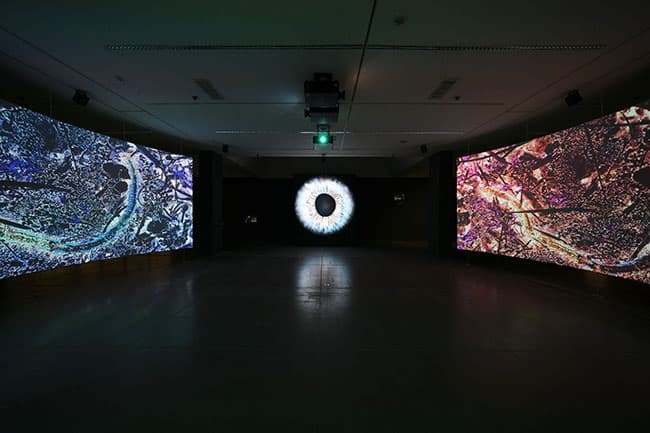
<The Time of the Earth> is an exhibition that reflects on the 'ecological worldview' called for as a new zeitgeist in the face of global crises such as the climate crisis and the COVID-19 pandemic. Moving beyond anthropocentric thinking and perspectives, it reflects ecologically on 'symbiosis', 'connection', and the 'recovery of balance'.
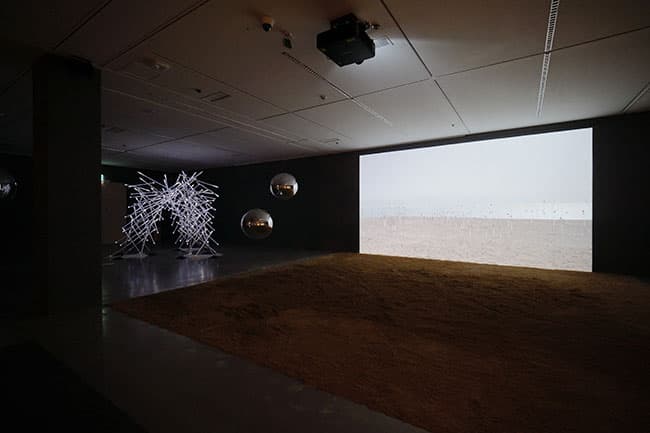
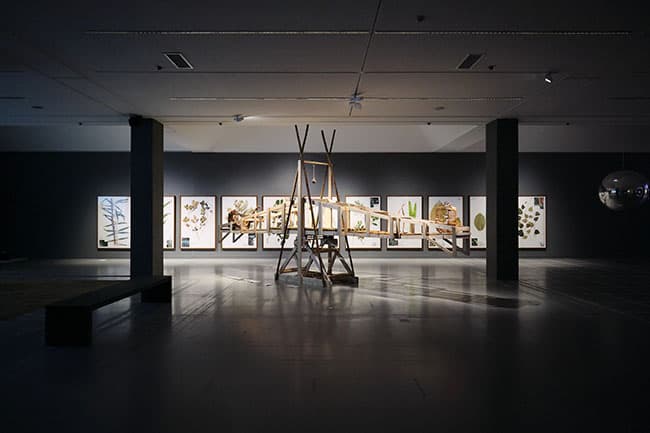
The exhibition presents 35 works by 16 Korean and international artists, spanning fields such as photography, sculpture, installation, video, architecture, and design. Together with new works by Kim Juree, Nha Hyun, Baek Jungki, Suh Dongju, Jang Minseung, Jeong Kyudong, and Jung Soyoung, the works submitted by Korean and international artists including Olafur Eliasson, Jean Luc Mylayne, Giuseppe Penone, Christian Boltanski, and Hiroshi Sugimoto explore themes such as the relationship between animals and humans, communion with nature, and the recovery of balance based on mutual respect, forming an attitude and shared sensibility for coevolution (共進化, the process by which multiple species evolve while influencing one another).
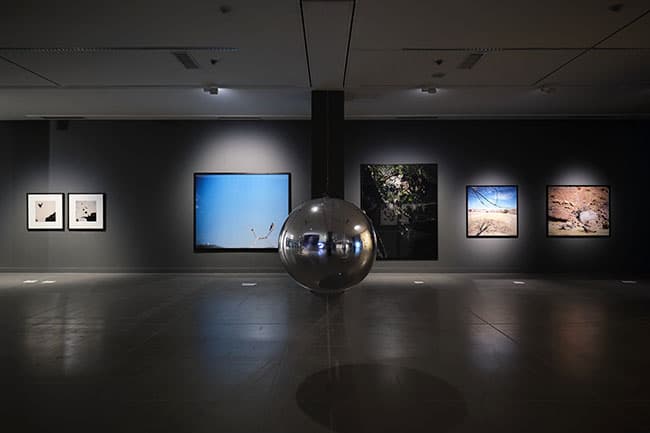
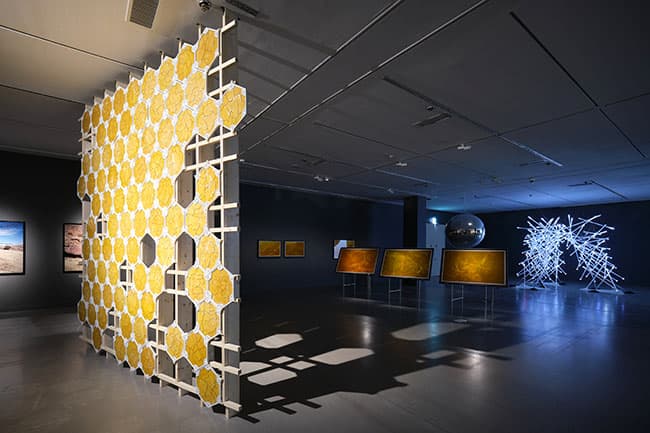
To draw closer to the ecological worldview we must practice for the sake of symbiosis and coevolution, <The Time of the Earth> dismantles the conventional exhibition framework from the very configuration of the exhibition space. It minimizes the temporary walls that remain as industrial waste after an exhibition ends, and creates a space in which the works communicate and connect with one another. Instead of temporary walls, air-inflated balls are installed to separate the works from the flow of visitors, and these are to be reused after the exhibition.
The approach of removing the temporary walls made it possible to break away from the convention of classifying an exhibition by content. The exhibition begins with the works of Jung Soyoung and Hiroshi Sugimoto, which show the anthropocentric view of and learning about nature. It then continues with the works of Olafur Eliasson and Kim juree, which reflect on how, within the vast history of the Earth and the flow of time, human time is no more than a small segment—situating ourselves not in human time but in the time of the earth, in which all living and non-living things have repeated cycles of life and death.
Giuseppe Penone's sculpture emphasizes the meaning of circulation and connection through a form in which new life extends from the surface of marble, into which the Earth's long time is compressed. Jean Luc Mylayne, who has communed and lived with birds all his life, recorded that time of communion from the vantage point of the birds. Suh Dongju's work, which examines the evolution of the 'visual' cognitive process in animals and humans, experientially embodies the commonality and individuality of life.
The study of the act of 'seeing' continues into Baek Jungki's landscapes of nature printed with natural pigments, prompting us to reflect on how the images of nature we think we know have been constructed and learned. Nha Hyun's research on Taiwan's indigenous peoples conveys, to modern people who are experiencing a climate crisis brought about in a short time by abrupt industrialization and the development of civilization, the wisdom of a way of life that reveres nature while preserving each other's domains.
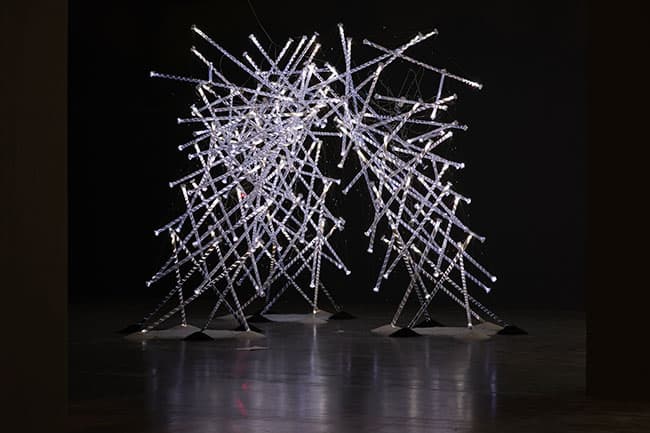
Christian Boltanski's bells of the soul remind us that people, the earth, the sky, and all unseen elements are connected together as one. Finally, Jeong Kyudong, who has realized a structure of columns that lean on and connect to one another, conveys a message about harmony and balance, respect and consideration, through the architectural concept of causality. In the Central Hall, Jang Minseung expressed Korea's modern history in the form of a large, empty circle, centered on the zoo, grand park, racetrack, and art museum that came to be located on the mountainside of Gwacheon under the government-led growth and internationalization plans of the 1980s.
In connection with the exhibition, an archive exhibition tracing the currents of Korean ecological art opens together in the Central Hall. Introduced alongside materials on the activities of various ecological art-related groups are: performance photographs and on-site documentary footage reenacting Jeon Kukkwang's 1975 work <Horizon>, a representative work embodying Korean ecological aesthetics; works by Lim Dongsik, a pioneer of Korean ecological art; works by Gwacheon-based artist Jung Jaechul, who collected and documented Gwacheon's redevelopment process; works by Kim Bojung, who explores human existence within nature and expands the boundaries of painting; and works by Lee Kyungho, who actively speaks out and takes action on the Earth's environment amid climate change and rising sea levels.
Meanwhile, the MMCA has been investigating and organizing the currents of Korean ecological art, which began in the 1970s in the process of overcoming modernism and seeking alternatives in the Korean art world. Through this research, conducted in collaboration with the Institute of Ecological Aesthetics and Art, it has organized major ecological art-related groups, artists, and exhibition projects from the 1980s to the present, and plans to publish a sourcebook and hold a symposium in December.
The 'ecological art' spoken of by <The Time of the Earth>—an exhibition that seeks to overcome the anthropocentric perspective and explore ecological thought and practice—is at once an act of looking back on humanity's past and a new possibility open toward the contemporary and the future. Through the new and representative works of contemporary artists, as well as an archive showing the birth and development of Korean ecological art, this exhibition sheds new light on the historical value of ecological art. It situates human time within the grand history of the Earth, the 'common home' of not only living beings but of all that exists. In doing so, it seeks to reflect on the ecological values that become clear only when humans recognize themselves as members of a vast ecosystem.
MMCA Director Youn Bummo stated, "This exhibition was prepared to reflect on the reality of various global crises, such as the COVID-19 pandemic, from an ecological rather than an anthropocentric perspective," adding, "I hope this exhibition becomes an artistic occasion that calls attention to the coevolution of humans and nature." 02-2188-6000