
Phenolic foam (PF) boards grow on the back of stricter building fire regulations and zero-energy policies
Insulation is a very important part of construction. Insulation materials must be selected with full consideration of thermal performance, durability, non-combustibility, and cost-effectiveness, and products should be chosen according to the location, scale, and purpose of the building.
According to the industry, the domestic market for building insulation is estimated at approximately KRW 1.2 trillion. The domestic insulation market is broadly divided into organic insulation, which uses core materials such as styrofoam, urethane foam, rigid urethane, and phenolic foam (PF), and inorganic insulation such as glass wool and mineral wool. In addition, there are other insulation categories such as aerogel and heat-reflective insulation.
Until now, the domestic insulation market has shown a strong preference for organic insulation because it is easy to install and inexpensive, despite its weakness of being vulnerable to fire. △In particular, styrofoam insulation, introduced in Korea in the 1970s, offers high thermal performance and moisture resistance and is lightweight, making it easy to install as well as inexpensive, and it holds the largest market share in the domestic market. △Phenolic foam (PF) is a high-performance insulation made by foaming a fire-resistant thermosetting resin to a closed-cell ratio of more than 90%. Phenolic foam (PF) insulation is a product that compensates for the weaknesses of both organic and inorganic insulation, and thanks to its excellent performance and durability, it is widely used mainly in advanced countries such as Japan, Europe, and Australia. In particular, its advantages include resistance to ignition, safety from the fact that it does not emit toxic gases, and long service life. The leading domestic manufacturer of phenolic foam (PF) insulation is LG Hausys. △Inorganic insulation, made of inorganic non-combustible materials, is very safe against fire and has the strength of preventing noise, but its weaknesses are that it is vulnerable to moisture and that air penetrating between the fibers makes its thermal performance inferior to that of organic insulation. To improve thermal performance, it must be made thicker, taking up a lot of wall space, and its heavy weight causes difficulties in installation. Therefore, it is more useful for wooden houses, which are vulnerable to fire, and for factories, ships, and other applications where fire prevention is essential, rather than for ordinary residential spaces. The leading domestic manufacturers of inorganic insulation are KCC and Byucksan. △Heat-reflective insulation is a product in which aluminum foil is attached to polyethylene foam resin, using the property of high-purity aluminum film to reflect heat in order to enhance thermal performance. Because installation is done by heat bonding, no dust is generated, making it convenient to install; it is thin and supplied in soft roll form, making it easy to transport, and it allows bending installation at corners, giving it excellent workability. However, most heat-reflective insulation has a structure that does not allow any moisture permeation, so when used in areas requiring breathability, problems can occur because internal moisture is not released. In particular, it can cause discoloration, mold, and cracking, which can affect both the surface and the structural framework. Since its function and likelihood of discoloration increase depending on the exterior material, it must be used together with dry finishing materials to perform its function properly. In Korea, it is mainly offered by various small and medium-sized enterprises that sell insulating wallpaper, and because a KS standard has not yet been established, performance may vary from company to company.
Insulation market landscape shifts after major fire incidents
The domestic insulation market began to show major changes following the 2014 Goyang Terminal fire and the 2015 Uijeongbu apartment fire. In particular, as the dryvit used as the building's exterior material acted as kindling, the market was, for the first time, presented with the issue of "using non-combustible materials." This is because dryvit—a finishing material made by attaching styrofoam to a building's exterior wall and coating it with plaster and the like—has the great advantage of being easy to install and inexpensive, but it also has the fatal weakness of generating toxic gases in the event of a fire.
Ultimately, right after these fire incidents, the scope of combustible exterior materials subject to prohibition was expanded in the field of building safety, and through the continued strengthening of existing building regulations, the range of applications requiring semi-non-combustible or higher grade finishing materials was expanded. The regulations revised in November 2019 tightened the rules so that buildings of three stories or more must be finished with flame-retardant materials, that the piloti sections on the first and third floors must also use non-combustible or semi-non-combustible finishing materials, or that when the material as a whole is regarded as one and is semi-non-combustible or higher, the insulation must use flame-retardant materials. In addition, as zero-energy building has recently become mandatory, the Ministry of Land, Infrastructure and Transport is, in order to strengthen the energy performance of new buildings, implementing mandatory zero-energy requirements in 2020 for public buildings with a total floor area of 1,000㎡ or more. The policy is to lay the groundwork for expanding this to private buildings of the same area by 2025, and there is a plan to strengthen the permit standard based on total energy consumption—currently Grade 1—to Grade 1+ next year and to Grade 1++ by 2023.
In this way, alongside fire-related regulatory restrictions on buildings and the government's drive to strengthen energy performance policies, social demand for high-performance insulation began to rise even further. As a result, demand for styrofoam and urethane foam, which had held the largest market share in the insulation market, is continuously declining. Instead, high-performance insulation with flame-retardant or higher performance is rapidly expanding to fill that gap and drawing attention, and accordingly the industry is launching a variety of semi-non-combustible products by material type.
Among these, the growth of phenolic foam (PF) boards, a semi-non-combustible insulation, stands out in particular. Phenolic foam (PF) insulation, first introduced to the domestic insulation market in 2013, did not attract much attention when it was launched, but the 2015 fire incident provided a turning point for the market to grow significantly. Currently, in addition to domestic production of phenolic foam (PF), imports of Chinese-made phenolic foam (PF) insulation are also on the rise.
This is because phenolic foam (PF) board improves on the toxic-gas problem in the event of fire, which was a drawback of conventional organic insulation. Furthermore, despite its thin profile, it can deliver thermal performance more than 20% higher than polyurethane and nearly twice that of styrofoam. In addition, while offering flame-retardant performance, its thinner profile compared to bead-method insulation has the advantage of reducing the common floor area in the design of apartment housing. On top of this, it has good sound absorption and is highly effective in energy saving. An industry official said, "Phenolic foam insulation is a product that offers outstanding thermal performance while having semi-non-combustible performance, and it is without doubt an advanced type of insulation that aligns with the trends of the times and consumer demand. However, techniques requiring precision in installation are a challenge that remains to be solved going forward."
The phenolic foam (PF) currently distributed in the domestic insulation market is divided into Type A and Type B according to KS-standard thermal conductivity, and there are slight differences in actual thermal performance. Therefore, even for the same phenolic foam (PF) insulation, it must be carefully distinguished and used by type.
An industry official said, "For all insulation products, not just the phenolic foam (PF) currently distributed in the market, flame retardance and energy performance have become the biggest issues. Because product performance varies by manufacturer, cases sometimes occur in which products that differ from the flame-retardant grade and thermal performance stated in test reports are actually delivered to sites, causing damage. Therefore, users are urged to be careful to properly distinguish and use products. As this is being pointed out as a major problem in the current insulation market, institutional mechanisms need to be introduced to prevent future cases of damage."
▲ LG Hausys phenolic foam insulation
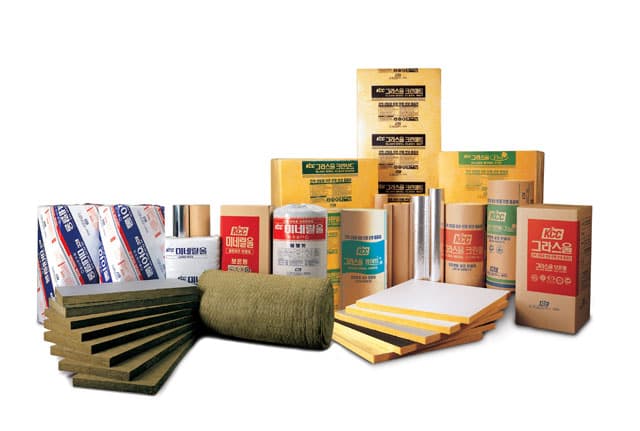
▲ KCC inorganic insulation product line
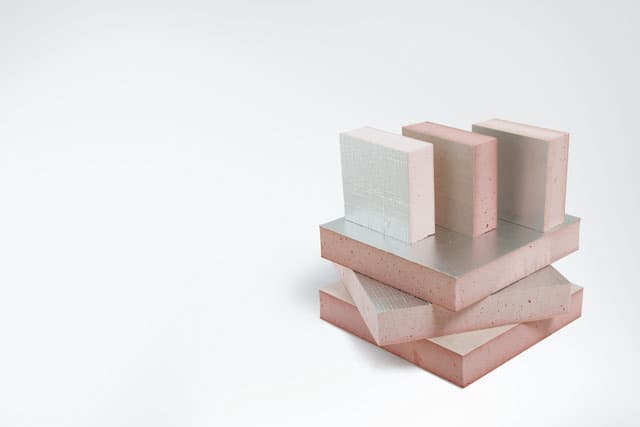
▲ LG Hausys phenolic foam insulation
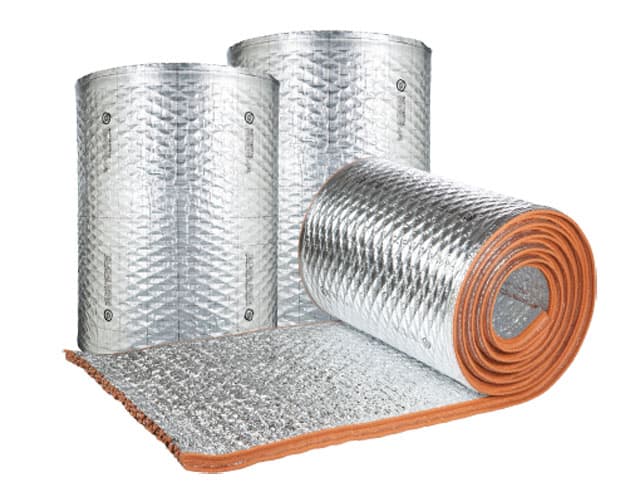
▲ Prime Enertech heat-reflective insulation