
An homage exhibition by five next-generation media artists
Through October 30 on the media wall in front of D-Forest, 1st floor of Sallimteo, DDP
This year marks the 90th anniversary of the birth of artist Nam June Paik. To commemorate the occasion, the Seoul Design Foundation is presenting <How to Remember Nam June Paik>, an exhibition of works by five next-generation media artists paying homage to his oeuvre, at the Dongdaemun Design Plaza (hereinafter DDP). The exhibition runs through October 30 on the transparent media wall installed in front of D-Forest on the 1st floor of Sallimteo. The show is a reconstruction—centered on media art works—of <Homage Exhibition: Nam June Paik, an Artist Ahead of His Time>, originally organized by the Art Square Gallery, which the Foundation has reworked to mark the 90th anniversary of Paik's birth.
The transparent media wall on which the works are shown is a media art platform that fuses design, culture and the arts, and technology, and it is one of the permanent media installations of Seoul's signature light festival, ‘Seoul Light.’ Nam June Paik continually expanded the world of art through relentless experimentation with media. In the same spirit, the Foundation aims to present the media art of next-generation artists on a new medium—transparent OLED, which embodies contemporary technological innovation—and thereby help broaden the scope of their activity.
The transparent media wall was built on May 31 through a collaboration between LG Electronics and the Seoul Design Foundation. It is a large-scale video panel, measuring 4.9 m wide and 1.6 m tall, that connects eight 55-inch panels into a single unit for the first time in Korea. Any visitor to DDP can step off the 1st-floor elevator at Sallimteo and view the media works unfolding within the transparent media wall free of charge.
The five next-generation media artists taking part in the exhibition are Shuk, buttercup, Yang Bin, Jang Seowon, and Yennicoi. Their works are pieces of media art created by reinterpreting Nam June Paik's works. In particular, they focus on the way Paik reconstructed historically symbolic events to communicate with the present.
DDP, where the exhibition is held, stands in the Dongdaemun area where Nam June Paik spent his childhood. This makes the exhibition commemorating the 90th anniversary of his birth all the more special. The five young Korean media artists, who grew up influenced by his work, said in unison, “It is a truly special feeling to present works paying homage to Nam June Paik in the very place where he spent his childhood.”
Lee Kyung-don, CEO of the Seoul Design Foundation, said, “Going forward, we will give next-generation media artists free rein to showcase their talents not only on the transparent media wall but also in various indoor and outdoor spaces of DDP,” adding, “Beginning with Seoul Light, DDP will continue to present a wide array of works that fuse design, media art, and technology.”
▲ Shuk's work <Virtual Fish> transposes into virtual space Nam June Paik's <Real Fish/Live Fish>, in which he simultaneously filmed with CCTV two televisions—one holding real fish and one playing a recorded video of fish. The fish existing inside and outside the television within the virtual space, along with the camera filming them, express the blurred boundary between the real and the virtual.
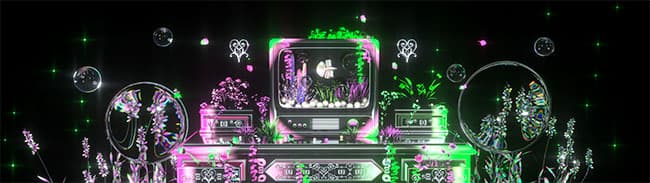
▲ buttercup's work <Eternal Present> expresses the idea that, as Nam June Paik said, “Once you are captured on video, you cannot die,” an image captured on video exists within an eternal present. From a spatiotemporal perspective, the fish within the virtual space of the metaverse becomes the present each time the virtual space is played.
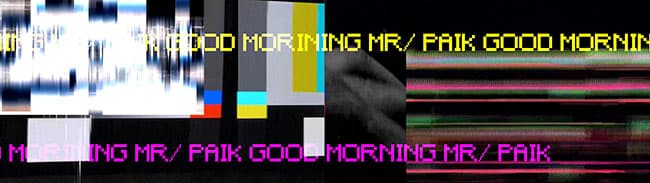
▲ Yang Bin's <Good Morning Mr. Paik> is a message addressed not to George Orwell but to Nam June Paik. The work conveys the message that Paik's words, “the cathode-ray tube will replace the canvas,” have become reality. To express this, the artist collaged several of Paik's works into a single media piece. Just as Nam June Paik performed the cutting of a necktie out of respect for the composer John Cage, the artist too incorporated the image of cutting a necktie into the work to pay tribute to Nam June Paik.