
Development of Eco-Friendly Paving Blocks
That Cut Carbon Emissions by 70%
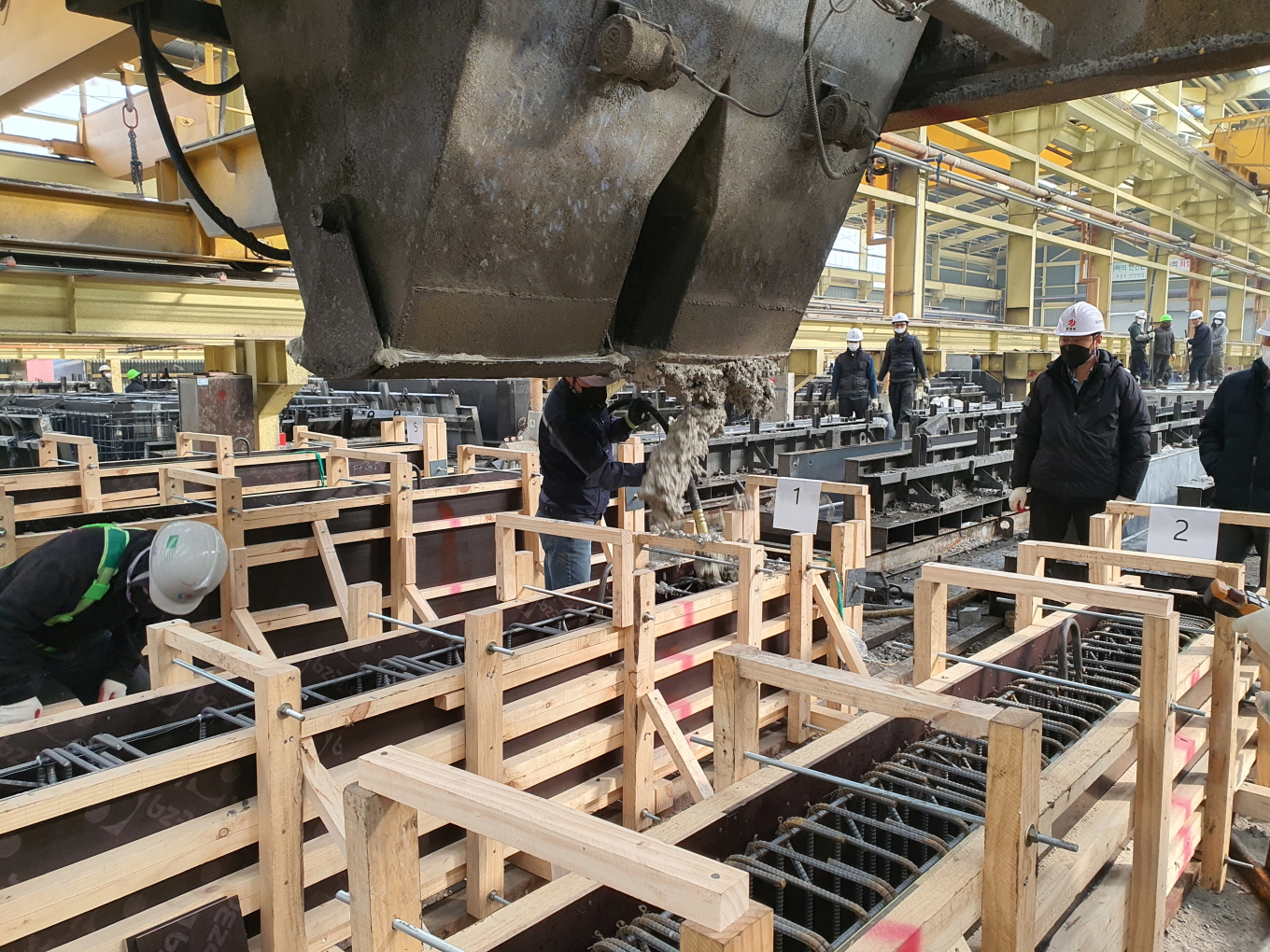
Samsung C&T's Engineering & Construction Group (hereinafter Samsung C&T) announced that it has developed a ‘Zero Cement Paving Block’ that applies concrete technology using no cement—a material associated with high carbon emissions—and plans to move into full-scale production.
As part of a shared-growth initiative, Samsung C&T signed a technology agreement with Jangseong Industry (located in Wonju, Gangwon Province), a concrete block specialist, and fully funded the research and development costs while collaborating to develop the zero cement paving block. Having completed performance verification of the product, the company will begin full-scale production in December. From 2024, it plans to expand the market by first adopting the blocks in Raemian apartment complexes.
The zero cement paving block applies eco-friendly concrete technology developed in-house by Samsung C&T. Instead of cement, which accounts for a high share of carbon emissions, it uses a special activator patented by Samsung C&T along with blast furnace slag, an industrial byproduct. This allows it to dramatically reduce carbon emissions while maintaining the existing quality and strength.
Cement, the main raw material in concrete, emits about 0.9 tons of carbon dioxide per ton produced. The zero cement paving block, which uses no cement, has the advantage of cutting carbon emissions generated during the production process by nearly 70% compared to conventional concrete paving blocks.
Samsung C&T is actively pursuing the adoption of eco-friendly construction technologies with the goal of achieving carbon neutrality by 2050. Building on the technological capabilities it has accumulated to date, the company is also accelerating the development and application of various carbon-reducing concretes.
Previously, in 2022, the company developed a low-carbon concrete that dramatically reduces carbon emissions by minimizing the proportion of cement used. Using low-carbon concrete can reduce carbon emissions by about 40% compared to conventional concrete, and it is being actively adopted at domestic sites such as the Pyeongtaek semiconductor plant. The company plans to gradually expand its application going forward.
▲ The process of manufacturing (pouring) low-carbon concrete test specimens