Through July 29 — Sculpture Not Fixed to Any Particular Meaning
Pursuing Fluid, Endlessly Changing Sculpture Using the Human Body as Subject
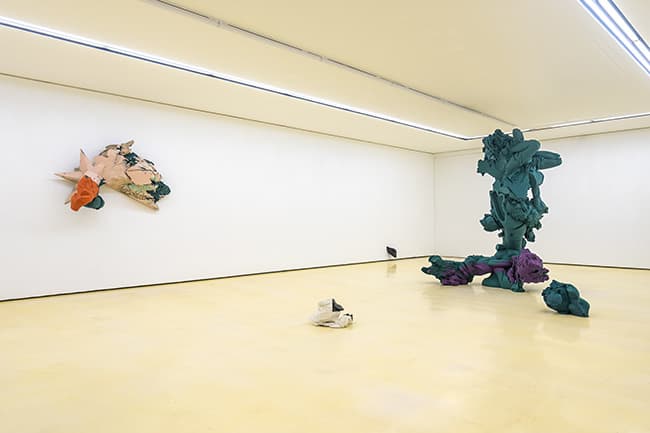
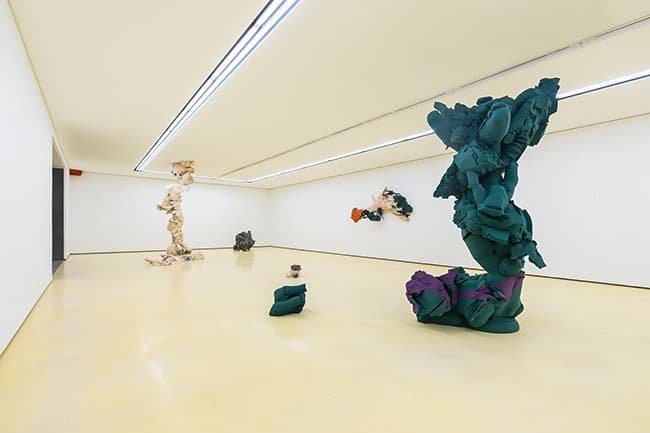
PERIGEE Gallery presents a solo exhibition by artist Lee Byungho from June 2 through July 29. Using a word that means a piece or a part as the title of the exhibition is intended to show how a single part becomes a complete whole, and how a complete whole in turn circulates back into some part. Going further, the artist seeks to move away from words such as mass, weight, existence, fixedness, and completeness—the basic qualities of sculpture as a medium—to arrive at sculpture that is light, brimming with the possibility of change, and not fixed to any particular meaning.
From his earliest works, Lee Byungho has taken the human body as his subject, pursuing fluid sculpture that changes endlessly. The theme he delves into begins with analyzing and observing the forms of the human body within a variety of sculptural methodologies. Among these, what has captured his interest are the volumetric body of the torso together with the head, arms, and legs that have been separated from it.
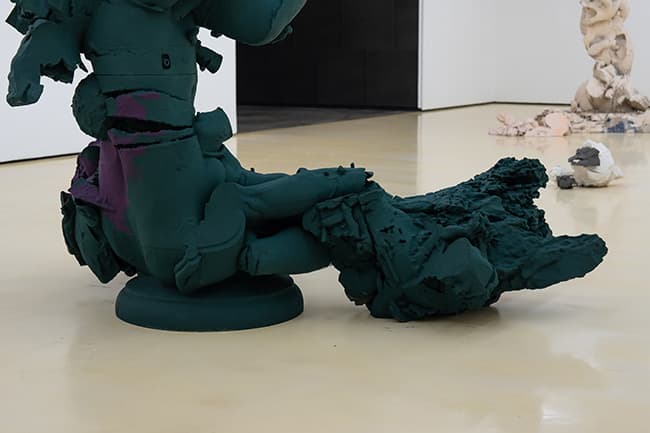
In the titles he has continued to use for his works, ‘Abattis’ is a French word referring to the leftover parts of poultry—such as the wings, legs, and innards, excluding the body—meaning the parts not chosen for cooking. Yet he does not regard these as things that have fallen away without meaning; rather, he sees them as formal objects brimming with the possibility of being recombined and reappearing as something whole. Thus, the notion of the part is one of the important theses of his work. The parts, selected and connected according to the artist’s intention and sensibility, become a single sculpture that is grotesque and strange, much like the meaning of ‘Eccentric.’
In addition, ‘reproduction,’ along with ‘the part,’ is an important element that forms the foundation of his working process. What the artist attends to in reproduction is the original that serves as the starting point of something, and the continuous flow that repeats infinitely through it. He uses the forms he created in his earlier works as subjects for reproduction and recombination, evoking new meanings by placing them in entirely different contexts.
For example, he repeatedly produces the forms of the human body as though they were standardized products. The human bodies made in this way become material for becoming something else through certain changes and connections, and accordingly transform into a single object bearing a human form. Beyond this, the artist has recently been converting these human bodies into digital images, accumulating a variety of forms.
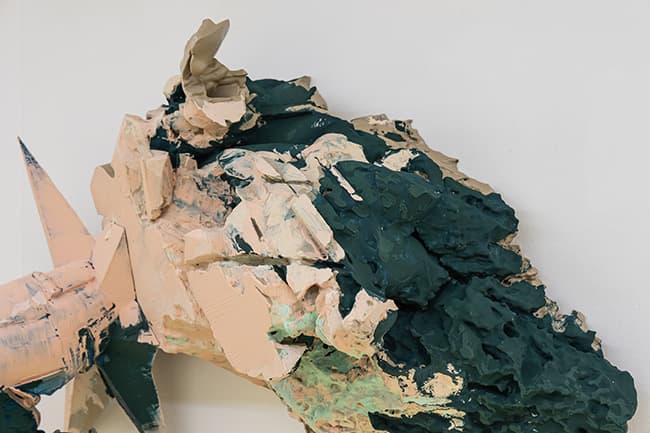
In this exhibition, the artist uses a variety of colors on the surfaces of his works, creating new surfaces by attaching gauze or painting with color pigments mixed into plaster. He perceives the brush as though it were a sculptor’s tool, and when applying color he uses it as if scraping away, carving off, adding on, and taking away, saying that he carried out this expression on the surface as though modeling in clay. In this way, he sought to move freely across the object unfolding before his eyes by following or ignoring form, and by making choices that break away from already established frameworks of expression.