
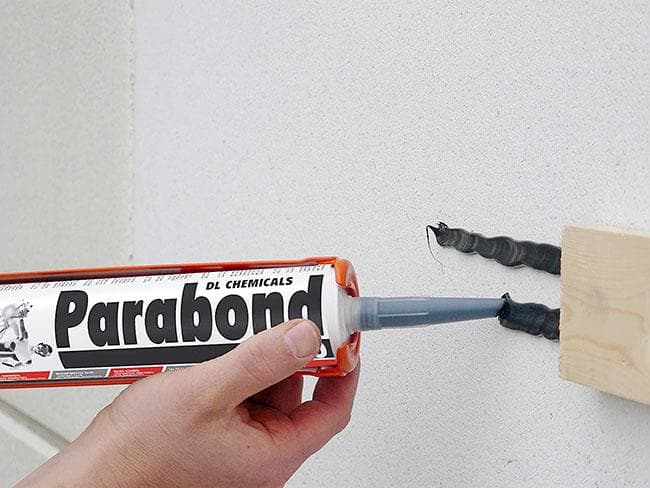
Concerns over installation defects caused by adhesives in interior and exterior finishing are disappearing.
DECOA Co., Ltd. (CEO Kwon Hee-taek), a building materials company, has launched full-scale sales of 'Parabond,' a silicone-type natural adhesive that eliminates installation defects at construction sites, moving to expand the relevant market.
'Parabond' is a one-component, MS polymer-based sealant adhesive manufactured by DL Chemicals of Belgium, and it is a future-oriented product that replaces conventional two-component epoxy adhesives. Compared with two-component products, it offers not only simpler and more convenient installation but also the benefit of shortening the construction period, and with its competitive pricing it is emerging as the leading candidate to take over the adhesive market going forward.
Parabond is an MS polymer (modified silicone polymer) adhesive from DL Chemicals, Belgium's largest such company founded in 1936. It can be used in almost any environment, offers very strong adhesive properties during initial curing, and is an eco-friendly product that does not cause staining.
Conventional epoxy adhesives are two-component products that require mixing a base and a hardener. The process of mixing the base and hardener causes worker fatigue, and because the usable time (pot life) is short, there was the inconvenience of having to mix the adhesive every time a single sheet of natural stone or tile (based on 600×600 mm) was installed. In addition, given Korea's climate with four distinct seasons, areas installed with adhesives (epoxy, silicone, etc.) using natural stone, tile, panels, and the like frequently detach or crack due to natural disasters that occur every year—such as summers with intense direct sunlight, harsh winters brought on by cold waves, transitional seasons with large temperature swings, typhoons, and earthquakes. In particular, when natural stone or tile installed on exteriors detaches, the scale of damage can be significant, so companies representing each site need to be alert to potential problems and take preventive measures in advance.
Parabond not only remedies the shortcomings of two-component adhesives but also has a wide range of applications, and it is being rapidly adopted as a replacement at recent job sites. Recently, as at-home living has increased due to COVID-19, Parabond has been drawing attention even from people with no installation knowledge, as consumers who take up self-interior work as a hobby make use of its advantage that 'anyone' can use it conveniently. In particular, Parabond delivers strong adhesion on almost all materials—stone, tile, metal, wood, glass, and more—and even between dissimilar materials. Its adhesion during initial curing is so strong that even a healthy adult man cannot easily remove it without tools, and with its permanent elasticity and excellent moisture-curing properties, it can be used 100% underwater or in damp locations such as bathrooms and underground parking garages. Above all, when installing the same area, its product purchase cost is lower and its workability is higher than two-component adhesives, so the relevant market is expected to expand rapidly in the future. However, Parabond cannot be used on vinyl/plastic-based materials such as PE, PP, PTFE (Teflon fluoropolymer), and bituminous materials (asphalt, bitumen-based).
Meanwhile, in specializing in the supply of stone and interior/exterior panels for decades, DECOA operates as its core business 3D digital printing-based panels that can substitute for the delivery-lead-time and installation issues inherent to the characteristics of natural stone. While pursuing its panel business, DECOA reviewed optimal adhesive materials and, in 2018, decided to distribute 'Parabond' in Korea. Currently, Parabond is used by POSCO E&C, Daelim Industrial, Lotte E&C, and Hyundai E&C, as well as various interior design firms. DECOA plans to conduct active sales activities with the goal of supplying all domestic construction companies going forward. 02-2646-9766
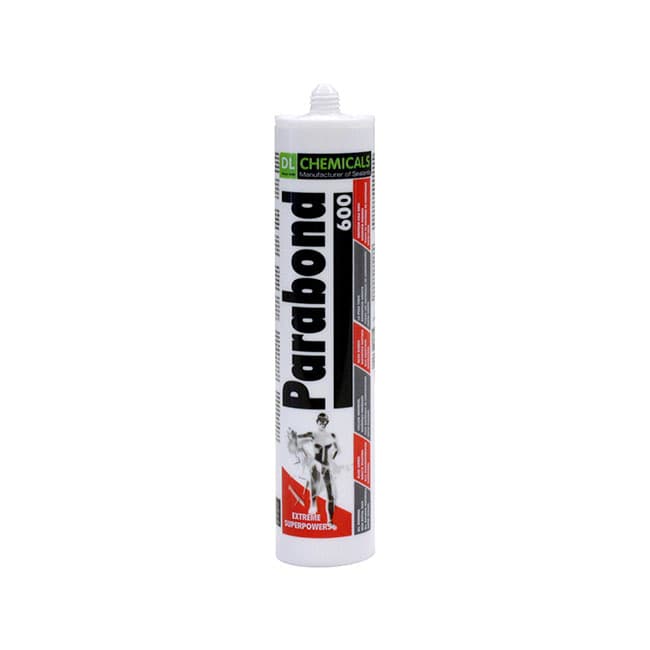
According to the Ministry of Land, Infrastructure and Transport, in the 'dry-set stone anchor fastening method,' connecting metal fittings are installed at the top and bottom and at both ends of the stone; the lower ones are used for support and the upper ones for fixing, and the anchors for the connecting fittings and the stone are secured with pins. Adhesive epoxy must not be used; instead, an irregular-shape one-component modified silicone must be used.
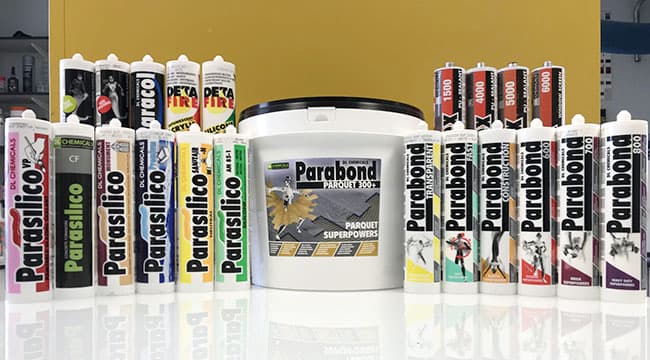
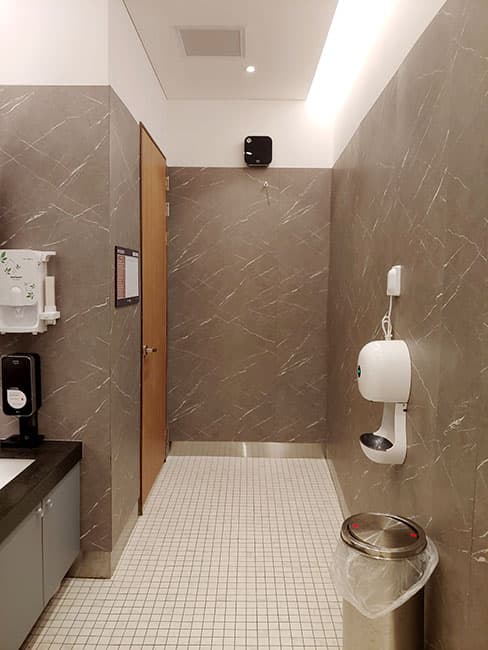
▲ Para Gwangju Banquet Hall
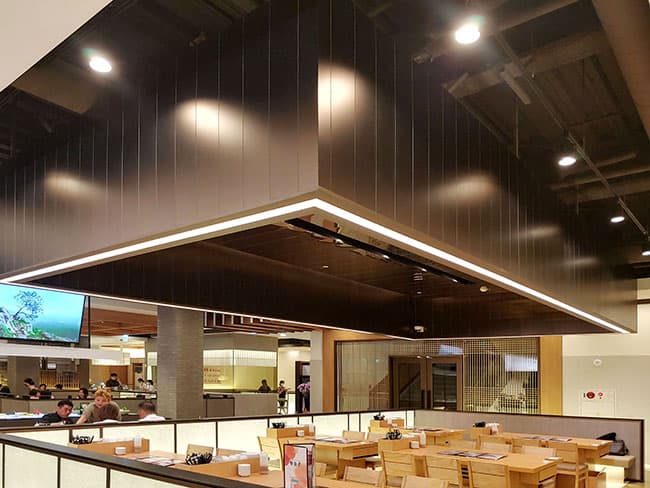
▲ Para Gwangju Banquet Hall
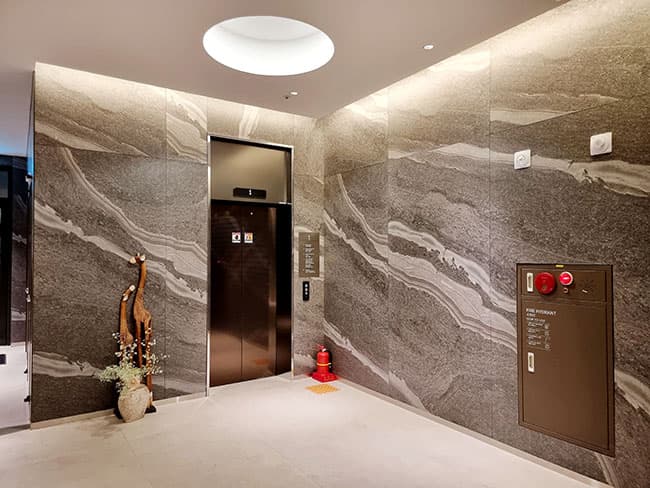
▲ Damyang De Monde Hotel
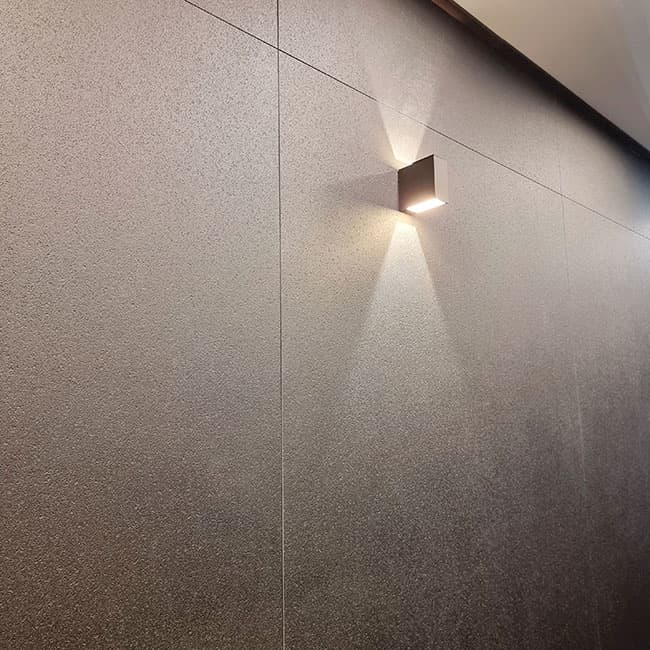
▲ Dummy
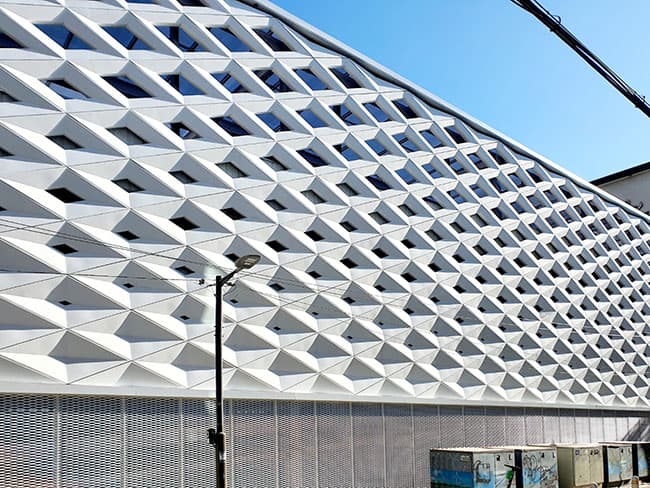
▲ Seongsu-dong Site
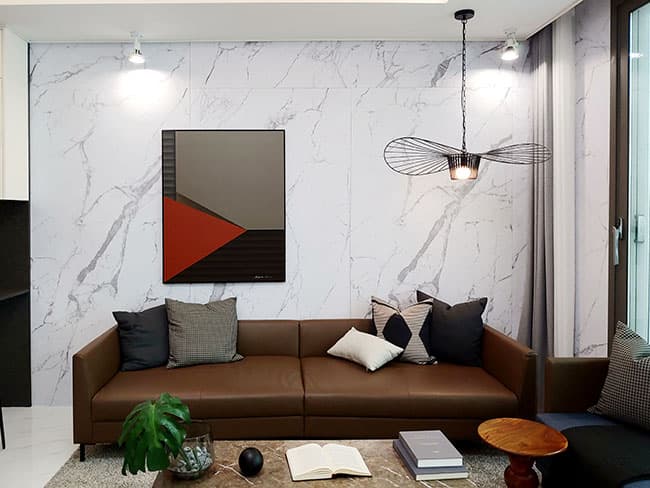
▲ Woolim Model House