Hyewon Art Gallery — Solo exhibition by ceramist Jigang Kim Pan-ki, running through May 30
The essence of the moon jar, standing at the heart of the globally celebrated K-Art movement
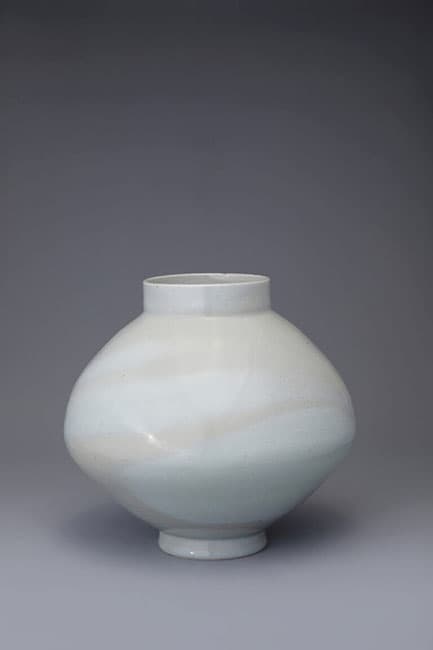
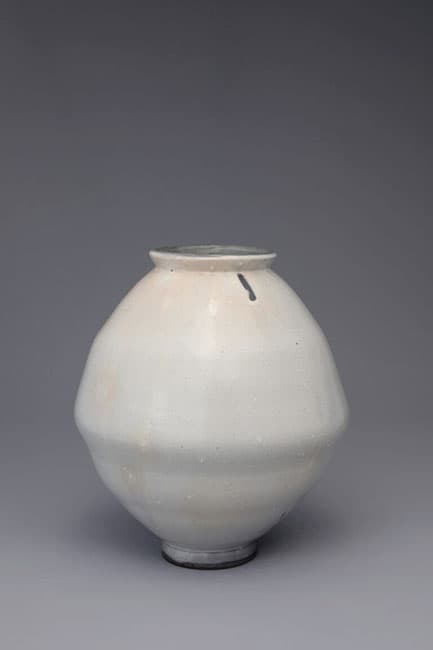
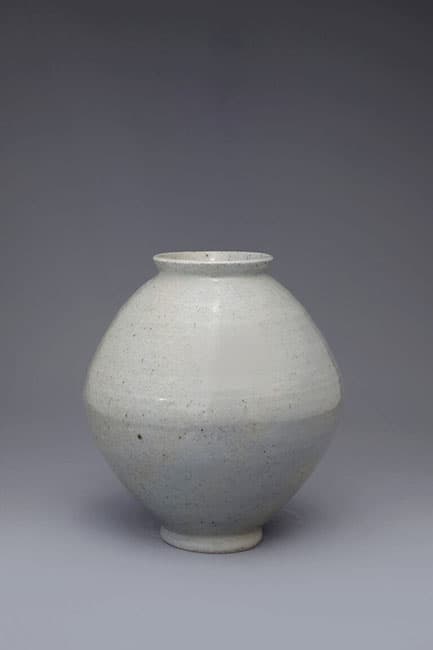
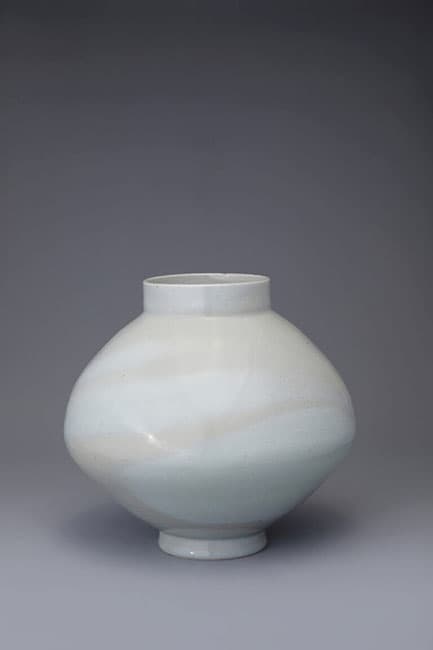
Hyewon Art Gallery announced that, through May 30, it will hold 'The Moon Jar: Standing at the Heart of K-Art,' a solo exhibition by 'Moon Jar Master' ceramist Jigang Kim Pan-ki.
At a time when interest in the moon jar is growing both at home and abroad, the exhibition is expected to become a new milestone for K-Art.
Kim Pan-ki is a leading ceramist of Icheon who has walked the path of pottery for more than 40 years. In 1983, determined to learn ceramics, he arrived penniless at a kiln studio in Icheon and took up the craft. Since then, he has built his reputation across a body of work spanning Goryeo celadon and Joseon white porcelain.
His list of awards is illustrious as well. He won the Grand Prize at the 2000 Dong-a Crafts Exhibition, the Gold Prize at the 2008 Gyeonggi Province Crafts Competition, UNESCO designation as an outstanding handicraft in 2008, and the Grand Prize at the 2012 Gwangju White Porcelain Competition, and in 2016 he was named an Icheon Ceramics Master. His studio, 'Jigang Doyo,' has been rooted in Icheon's pottery village for more than 20 years.
Jigang Doyo (之江陶窯) is the name of the studio given to the master by his own teacher. It means to live a life that flows as freely as a river. It also signifies approaching the making of work without haste, with a serene dignity. This same honesty and purity is revealed in his working style. Rather than flashy technique or color, he pursues a direction that brings out the characteristics of the clay body and glaze. The harmony between the essence within tradition and modernity is his endless subject of contemplation.
Kim Pan-ki said, "Our white porcelain moon jars value the inherent color that rises from the clay itself. These days the trend tends to favor a very matte, white texture. Even so, unlike Japanese or Chinese porcelain, the principle of Joseon white porcelain is to value the color that rises from its very roots," adding, "Only then does it have greater depth, and only then does a story seep out from within."
The aesthetic of the moon jar as he sees it is far removed from the quantified, formulaic standards of the West.
Kim Pan-ki went on to add, "With celadon, color must come first; with white porcelain, form must come first — because it has to be beautiful. It must be neither awkward nor forced, but natural. It cannot be defined in a single phrase. With this moon jar, too, apart from the rule that the foot must be smaller than the mouth, everything belongs to the realm of harmony."
The moon jar now stands at the heart of K-Art, which is drawing worldwide attention. The novelist Alain de Botton wrote in his book, "When I look at a moon jar, I gain intense emotion and courage," and the world-renowned designer Jonathan Anderson purchased 20 moon jars to decorate Loewe stores around the world. During the PyeongChang Olympics, a moon jar-shaped cauldron was etched into the minds of people worldwide as a symbol of Korea. More recently, BTS's RM (Kim Nam-joon) also unveiled his moon jar collection on social media, drawing great popularity.
In the early 20th century, the renowned British modern ceramist Bernard Leach, after purchasing a moon jar in Gyeongseong and returning home, said, "I am carrying happiness home in my arms." As the long nights of the pandemic pass, it is a spring in which the moon jar — happiness held in its embrace — comes to mind.