On view at MMCA Gwacheon through March 26
A look at the relationship among art, design, and industry during the era of national reconstruction
The National Museum of Modern and Contemporary Art (MMCA, Director Youn Bummo) presents <Modern Dejain: Toward Art That Serves Everyday Life, Industry, and Diplomacy>, an exhibition examining the relationship among art, design, and industry during the post-liberation era of national reconstruction through modernization and industrialization. The exhibition runs through March 26 at MMCA Gwacheon.
<Modern Dejain: Toward Art That Serves Everyday Life, Industry, and Diplomacy> is built around the works and archive of Han Hong-taik (1916–1994), donated to and collected by MMCA in 2021, together with the archive of Lee Wan-seok (1915–1969), donated in 2022. Drawing on these materials as well as a wide range of documents and the work of contemporaneous artists, the exhibition explores the birth and development of modern and contemporary Korean design from a variety of angles.
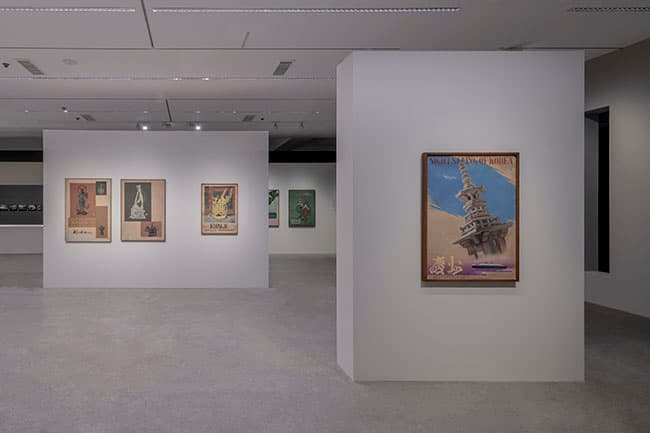
The title “Modern Dejain” is taken from the <2nd Han Hong-taik Modern Dejain Exhibition> held in 1958, evoking the conditions of an era before the term “design” became common, when translated terms such as dohan (drafting), industrial art, everyday art, applied art, and decorative art were used interchangeably. This exhibition presents Han Hong-taik’s archive alongside design works in various formats—packaging, book covers, drafts, and more—that offer a glimpse of the proposals and experiments through which he sought to establish his standing as an industrial artist. In addition, through photographic and video archives documenting the diverse signboards, clothing, and other elements of the urban landscape of the 1950s and 1960s, visitors can trace from multiple perspectives the visual culture of the day that was woven into everyday life in Korea during the era of national reconstruction.
The exhibition is organized into four parts: △Part 1 “Art and Industry: The Birth of the Industrial Artist,” △Part 2 “Modern Dejain: Sensing the Everyday,” △Part 3 “Identity and Subjecthood: Artists and Designers,” and △Part 4 “Tourism and Leisure: Toward Spaces of the Extraordinary.”
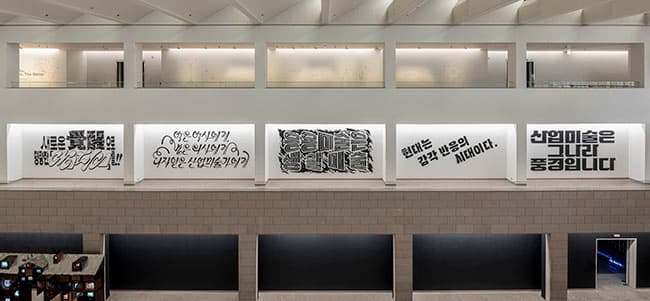
In the second-floor corridor space that connects the beginning and end of the exhibition, the installation project <Slogans of the Dejain Era> (2022), created in collaboration with 10 contemporary graphic designers/teams, is on view. Through contributed essays by industrial artists, statements on design policy, and articles left by journalists and critics, the project sheds light on the social conditions that designers of the “Dejain” era faced—including perceptions of design at the time and the tasks that the era demanded of it.
MMCA Director Youn Bummo said, “This is an opportunity to examine, through a wide range of works and materials, the activities of early industrial artists that have until now been little known,” adding, “We hope this exhibition will serve as a foundation for examining the process by which the histories of modern and contemporary Korean art and design intersected and diverged from one another, and for expanding the arena for discussion across fields.”