Figurative sculpture addressing femininity and the body in the 1980s–1990s
Artist Kiki Smith's first solo museum exhibition in Asia
The Seoul Museum of Art presents <Kiki Smith – Free Fall> at its Seosomun Main Building through March 12.
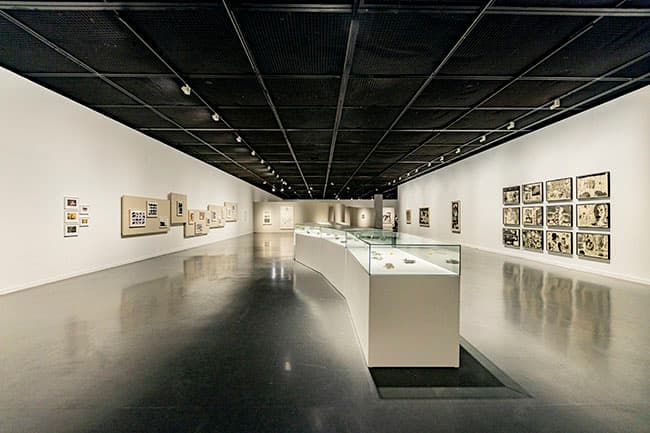
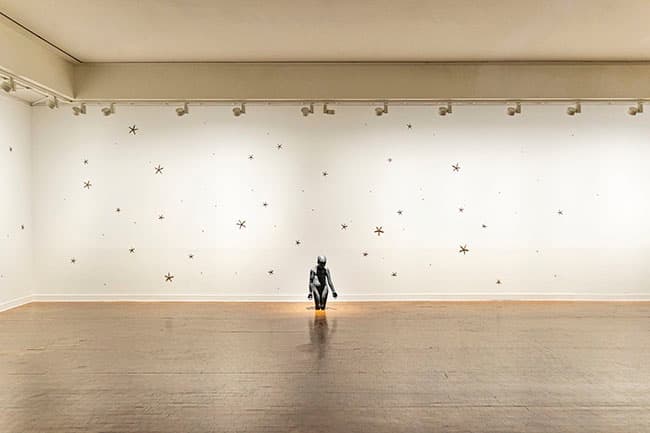
<Kiki Smith — Free Fall> is the first solo museum exhibition in Asia by Kiki Smith (b. 1954, New York, USA), a leading contemporary artist who has drawn worldwide attention for her figurative sculpture addressing femininity and the body in the 1980s and 1990s. This exhibition, which offers an overview of the artist's finely tuned body of work, presents some 140 works spanning a range of media including sculpture, prints, photography, tapestry, and artist's books.
Passing simultaneously through the Seoul Museum of Art's 2022 institutional agenda of "Production" and its exhibition agenda of "Poetry," this exhibition uses the keyword "Free Fall" to unravel Smith's identity as a maker who explores diverse media, as well as her artistic character of varying her formal cadence in step with the vicissitudes of the times.
Amid the boundaries drawn along dichotomies—life and death, the real and the ideal, the material and the immaterial, male and female—the artist has chosen nonlinear narratives over clear-cut answers. With slow, long breaths, Smith listens to "all living things, great and small" around her and offers a message of coexistence—an attitude and a value worth revisiting today, in an era grown accustomed to modifiers like excess, overflow, and surplus.
The exhibition title "Free Fall" evokes the erupting, vital energy inherent in Kiki Smith's work, functioning as a connecting point that binds together the artist's vast range of media and creative activity over the past four decades.
Rather than a chronological arrangement or the prescriptive approaches that have long qualified the artist with terms such as "woman" and "body," the exhibition's detailed structure is grounded in several structural characteristics found at the core of Kiki Smith's oeuvre, such as "narrative structure," "repetitive elements," and "energy."
The exhibition space is organized not as a one-directional structure but as a curved, circular one, allowing visitors to imagine various paths within the galleries. This structure symbolizes the movement of wandering that the artist has emphasized in describing her own artistic practice as "like strolling through a garden." The artist's invisible movement, coming alive up and down and side to side, can also be encountered as scent in this exhibition. Composed based on the exhibition, it fills the spaces throughout the run of the show, offering an olfactory experience through which visitors can perceive the exhibition in a new way.
Kiki Smith said, "I am delighted to meet audiences through an exhibition in Seoul, a city the world is watching," adding, "This exhibition, which looks back over some 40 years, is deeply meaningful to me personally. I hope visitors will feel an inner freedom through it."
<Kiki Smith – Free Fall> installation view ⓒ Kim Yun-jae, courtesy of the Seoul Museum of Art