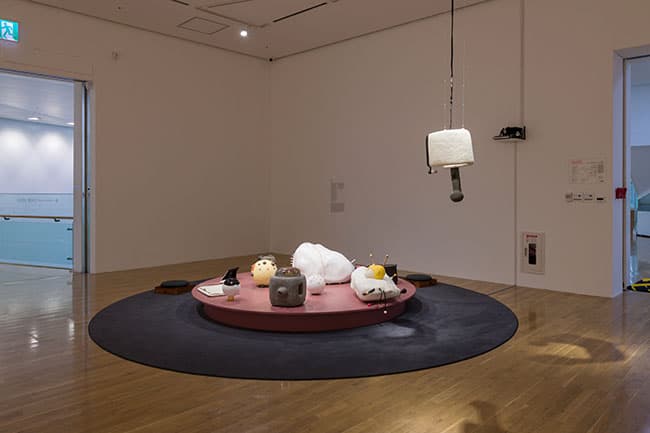
Works by 17 acclaimed young artists working with ‘sculpture’
A comprehensive analysis and visualization of the changing tendencies in sculpture
The Seoul Museum of Art (Director Baik Jisook) is presenting <Sculptural Impulse> at the Buk-Seoul Museum of Art through August 15.
Based on ‘Production,’ the Seoul Museum of Art’s institutional agenda for 2022, this exhibition seeks to comprehensively analyze and visualize the changing tendencies of the art scene—particularly sculpture—and to fulfill the museum’s role as an expanded field that embraces realistic discourse.
It is structured to interpret and contextualize, from a comprehensive and macroscopic perspective, the changes in sculpture that have until now been addressed on a small scale in emerging spaces and elsewhere, and to accumulate foundational research and materials on the ‘points of change’ in contemporary sculpture that raise the question, ‘Why sculpture now?’
<Sculptural Impulse> presents works by 17 young artists who are addressing ‘sculpture,’ currently drawing attention both within and outside the art world. At a time when the traditional concept of sculpture has broken down, the exhibition introduces the works of 17 young artists who have driven the reflections and changes accumulated over the past decade or so around the question of ‘what sculpture is.’
As the COVID-19 pandemic has made non-contact environments a part of everyday life, and with the rapid arrival of the virtual reality (4D) era on the horizon, the exhibition examines how sculpture perceives and responds to such environmental changes when fundamental senses or perspectives shift through virtual reality.
It views the attempts of contemporary sculpture to newly conceive the physicality, image, materiality, and status of traditional sculpture as art’s adventure in seeking to break free from the ‘image,’ ‘object,’ ‘data,’ and ‘position (social and spatial)’ that dominate reality.
The selected works resemble the ‘sculpture’ familiar from the past, yet possess an internal compositional logic that differs from the existing one in their physicality, image, materiality, and status. This is because, using traditional sculpture as a support, questioning ‘what sculpture is’ and ‘how three-dimensionality generates meaning’—while on the other hand conveying a contemporary sensibility and critical perspective that passes through the screen of a mobile phone or the body in a non-contact environment—has become a prerequisite task for sculpture today.
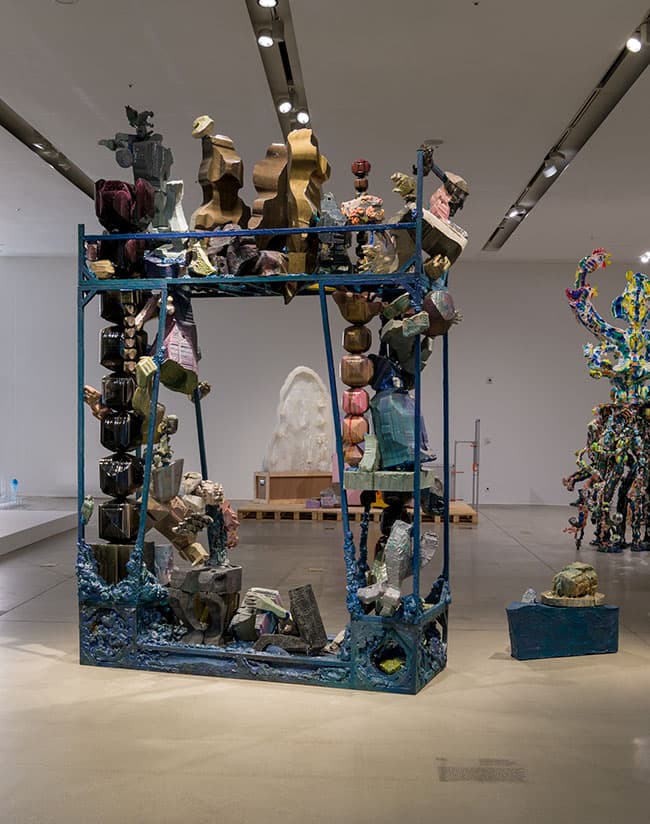
Specifically, visitors can encounter ‘sculpture that is and is not sculpture,’ ‘sculpture that forms relationships,’ ‘sculpture that seeks to break free from image, object, data, and position,’ and ‘sculpture that reconstructs the conditions of existence.’
Through this, the artists—cutting across the status of sculpture, which is changing according to shifts in the social environment and the foundations of existence—generate artistic practice and unfold their will to break free from the ‘image,’ ‘object,’ ‘data,’ and ‘position (social and spatial)’ that dominate reality. This will become the driving force that casts sculpture into the visual field—which is at once a visual framework and one that implies networks of social meaning and circulation—to open up a gap, making sculpture into sculpture and art into art.
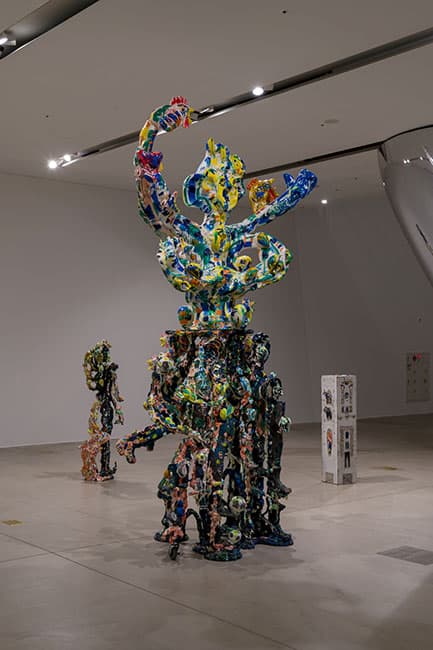
▲ Choi Haneyl Facing each other, <Gangcheori (Ironclad) (Kkangcheol)> and <Baekjwayong Monument> respectively signify sculpture expanding in its totality and immaterial sculpture, serving as metaphors for the current situation in which sculpture finds itself. <Gangcheori> expresses totalized sculpture as a greedy imugi (a serpent that failed to become a dragon), reminding us of the tasks that a single sculpture must explore. <Baekjwayong Monument>, positioned opposite <Gangcheori>, is designed so that the image of a dragon emerges through a QR code. It is a being that asks what would happen if sculpture, grown weary of cultivating theatrical scenery in the irreversible process of dematerialization, were to give up possessing material altogether—and, going even further, were to give up its own body.