
Exploring the relationship between 'the poetic' and contemporary art, with 'poetry' at its center
Viewing and interpreting the collection anew through the attributes of poetry
The Seoul Museum of Art (Director Baek Ji-sook) presents <The Poetic Collection> at its Seosomun Main Building through May 8.
<The Poetic Collection> explores the relationship between contemporary art and 'the poetic' through works the museum has collected over the years. Here, 'the poetic' is presented as a broad concept that moves freely across the boundaries of the literary genre. This exhibition is also an attempt to view and interpret the collection through the attributes of poetry, centering on 'poetry,' the museum's exhibition agenda for 2022.
The artistic qualities of poetry have often been compared to art since the past, and have served as an endless source of creative inspiration for artists. This exhibition focuses on the characteristics of the poetic speaker, the confessional nature, and the linguistic aspects found in poetry, and is composed of three sections: 'The Speaker,' 'Confession(s),' and 'Poetry and Art.'
The first part of the exhibition, 'The Speaker,' is a story about the speaker. There is always a speaker present in a poem—the speaker may be the poet themselves, or a proxy or persona put forward by the poet. Focusing on how the presence of the speaker changes and varies in diverse ways, much like a play, this section presents related works. Works by Kim Sejin, MIOON, Park Kyung-joo, Byen Ungpil, Jang Sung-eun, Jung Kangja, and Choi Byungso are shown in this part.
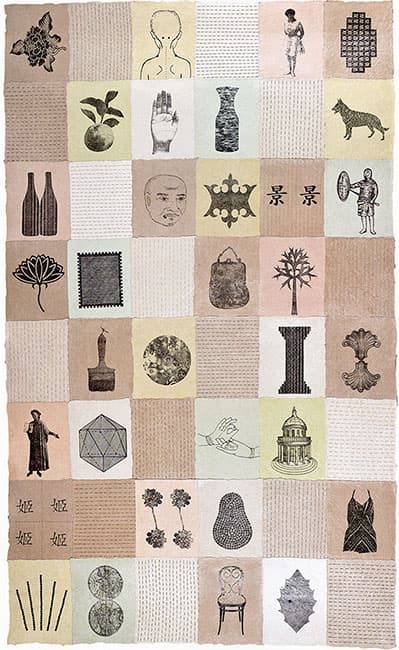
'Confession(s)' is a part with a dual meaning: 'confession' and 'the record of confession.' One of the reasons poetry draws empathy from so many people is its confessional quality of sharing private experiences and inner thoughts with the listener. In the works of Kim Dong-kyu, Park Hye-soo, Bae Yoonhwan, Song Younggyu, Jin-me Yoon, Lee Eunsil, Jun Sojung, Cho Sohee, Ju Hwang, and Ham Hye-gyung shown in this part, a reflective character stands out prominently. They confess private experiences and thoughts in a refined formal language.
Finally, 'Poetry and Art' approaches the linguistic and formal aspects of poetry and examines from multiple angles the visual language that appears in artworks. Poetic language begins with very specific words, yet possesses an 'ambiguity' that allows for multiple interpretations. The formal language used by artists is also highly implicit, at times defying logic and achieving poetic leaps. Works by Kwon Aram, Kim Beom, Kim Seeun, Roh Sukmee, MeeNa Park, Park Sangsuk, Shin Kyunghee, Yeom Jeehey, Lee Kun-yong, Lee Kyoujun, Lee Dongi, Lee Seulgi, Jeon Joonho, Choi Byungso, and Choi Eunhye—who experiment with the possibilities and limits of visual art—are shown in this part.
The exhibited works include newly acquired pieces collected last year, as well as many works being shown for the first time since their acquisition. This exhibition holds significance as a venue for sharing the collecting activities of a public institution and their results through the collection that reveals the museum's identity.
Baek Ji-sook, Director of the Seoul Museum of Art, said, "This exhibition, which presents the collection in connection with the artistic attribute of 'poetry,' will serve as an occasion to newly perceive the meaning of the works through the relationships of influence among the different artistic domains," adding, "We will lower the psychological barriers that citizens feel toward the museum and make it possible for a diverse range of visitors to appreciate the works." 02-2124-8800
▲ Park Hye-soo, 'Goodbye to Love Ⅰ'
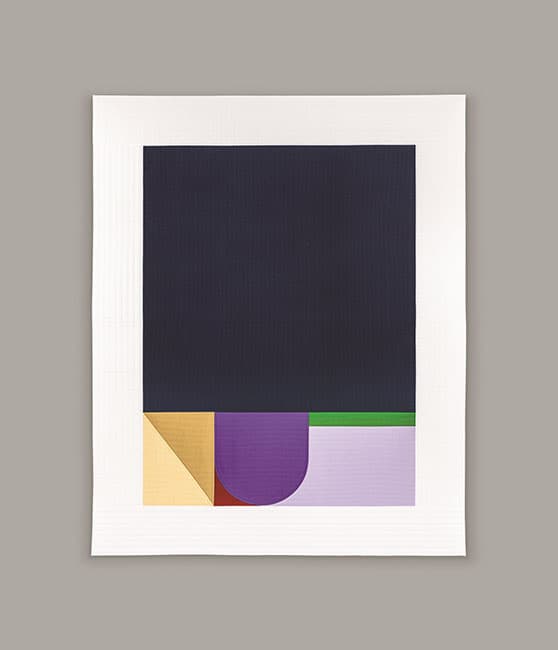
▲ Lee Seulgi, 'U Jwi Jugeun Deut (Quiet as a Dead Mouse)'