
Hyundai E&C Simultaneously Improves Living Conditions and Asset Value of Aging Complexes
Building on the Trust of the Hillstate Brand, Expanding Resident-Friendly New Businesses
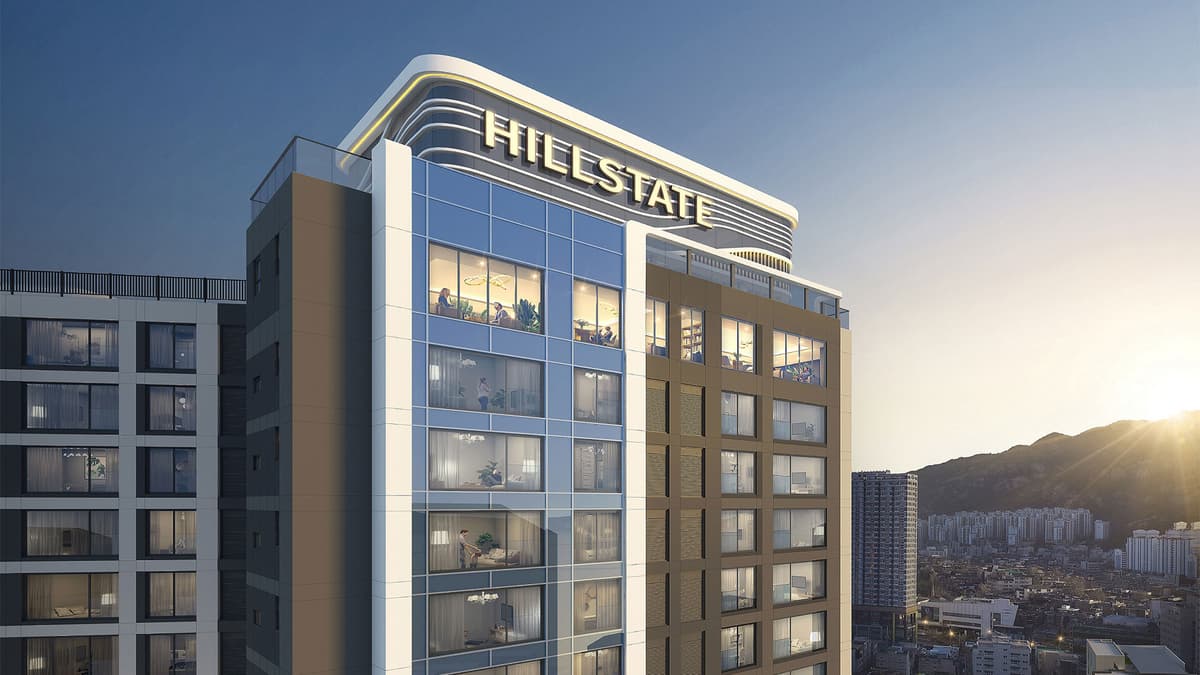
Hyundai E&C is moving forward in earnest with a “residential environment improvement new business” that raises the living quality and asset value of aging apartment complexes without requiring residents to relocate.
Hyundai E&C announced that it has signed a memorandum of understanding (MOU) to create a premium residential complex at Samseong-dong Hillstate Complex 2. Hyundai E&C’s new business is a project that renews aging complexes without relocation, achieving residential quality and premium value on par with new construction. It focuses on delivering practical improvements in living conditions for complexes where, given real-world constraints, reconstruction or extension-type remodeling is difficult. It carries significant meaning as a realistic alternative for complexes that struggle to pursue conventional redevelopment due to various regulations—such as reconstruction age requirements, safety inspection pass criteria, and floor area ratio limits—as well as high resident contributions. The Samseong-dong Hillstate Complex 2, which entered into the agreement, is a large complex in its 18th year since completion and shares the improvement needs common to aging complexes, including parking lot leaks, aging facilities, and a lack of community spaces. Owing to the limitations of an aging complex, it shows a price gap with nearby newly built complexes, but once the major-repair new business is completed, that price gap is expected to be substantially resolved. Hyundai E&C is preparing a differentiated design to elevate the previously insufficient residential conditions within the complex to the next level. The scope of the project is classified into common areas and unit interiors. For common areas, in addition to exterior upgrades to the outer walls, building entrances, landscaping, and community spaces, advanced technologies such as an underground parking system, electric-vehicle fire prevention equipment, and smart access control are applied—all without residents needing to relocate. Unit interiors involve interior work including inter-floor noise reduction structures, high-performance windows and doors, high-IoT-based systems, and energy-saving equipment, applied only to units that wish to have it.
The simplicity and stability of the project’s procedures are also a strength. Whereas existing residential environment improvement projects such as reconstruction and remodeling are subject to the “Act on the Improvement of Urban Areas and Residential Environments” and the “Housing Act” and take a long time, the new business can be carried out under the “Multi-Family Housing Management Act.” The residents’ representative council implements the project, while Hyundai E&C directly performs the entire process—from design and administration to construction and after-sales service (AS). By establishing a multilateral cooperation system between the two business operators and the local government, stable yet rapid project execution is possible.
In addition, by minimizing the demolition of existing structures, less construction waste is generated compared to reconstruction, and because work can proceed without relocation, the existing residents’ housing stability and sense of community within their neighborhood can be continuously maintained. This also aligns with the sustainability strategy Hyundai E&C presented at its CEO Investor Day this past March.
Through this project, Hyundai E&C plans to contribute not only to improving resident satisfaction but also to raising the overall value of the local complex. By resolving the price gap with new apartments, it aims to bring about multilayered ripple effects, including the rebranding of aging complexes in old urban centers as well as price stabilization in the surrounding real estate market and improvements to the urban landscape.