
'Korean-Style System Windows and Doors' Emerge as a New Alternative for Temple Windows and Doors
Applied to Various Temple Spaces with Superior Insulation and Airtightness Performance
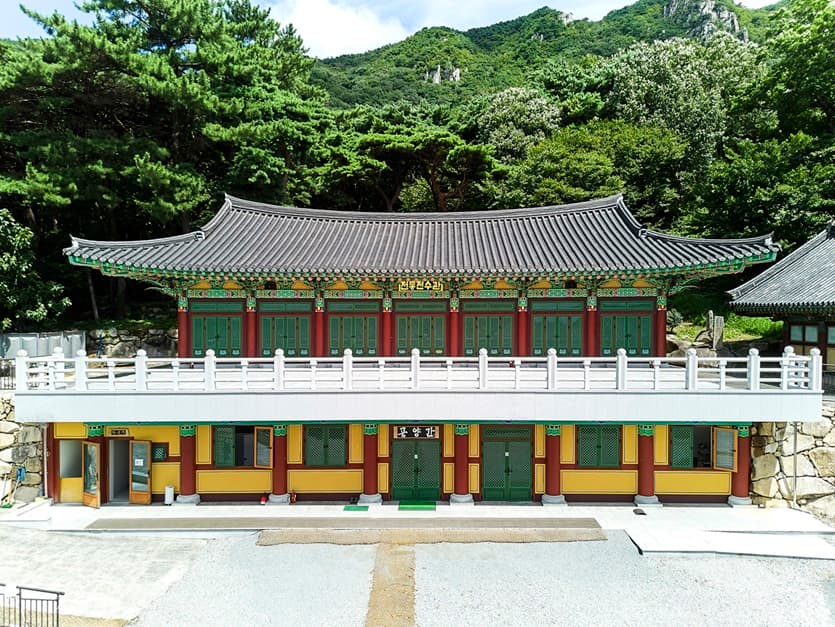
Cheomdan Hanok Changho (CEO Lee Won-yong) is earning recognition for its technical capabilities through a string of orders in the temple architecture market. The company's Korean-style system windows and doors feature a hybrid structure combining wood and aluminum, which not only provides stronger support for the hanok's trim lines but also prevents the sagging and warping of wooden windows and doors thanks to a laminated solid-wood frame. In particular, the application of airtight hinges and a double-gasket design has strengthened insulation and airtightness performance. This delivers savings on heating and cooling costs as well as excellent blocking of external noise.
CEO Lee Won-yong stated, "Temples, most of which have hanok structures, are vulnerable to poor insulation and suffer significant energy loss. It is highly meaningful that our Korean-style system windows and doors have been adopted as an alternative that preserves the design of traditional temple windows and doors while preventing energy loss."
Cheomdan Hanok Changho's products have an average thermal transmittance of 1174–1121 W/㎡ and airtightness of 0.76–0.00 ㎥/㎡h. Considering that the required thermal transmittance for building components by region is 1300 W/㎡·K or less in the Central Zone 1, 1500 W/㎡·K or less in the Central Zone 2, and 1800 W/㎡·K or less in the Southern Zone, the products' insulation and airtightness performance is superior. A window's thermal transmittance is the amount of heat passing through per unit area of the window; the lower the value, the better the insulation performance.
Over the past five years, the company has supplied and installed its products at more than 100 temples nationwide, including Bongeunsa, Tongdosa, Hwaeomsa, Heungcheonsa, Daeheungsa, and Donghaksa. Its products have been applied to a variety of temple spaces such as temple stay facilities, meal halls (gongyanggan), tea culture centers, and cafés, with the main products being casement windows, sliding windows, and project windows. The window latticework incorporates traditional designs such as sesal and yongjasal. The company's production facilities are optimized for supplying large-scale hanok sites. Unlike existing hanok window-and-door factories, it has built and operates an automated system for production processes including lamination, cutting, machining, assembly, and coating, enabling mass production and consistent quality control.
▲ Eunhasa Temple in Gimhae. Two- to four-panel casement windows and entrance doors were applied to the traditional transmission hall and meal hall (gongyanggan).