Hyundai E&C carries out the entire process in one stop — from basic research and technology development to demonstration and real-world application
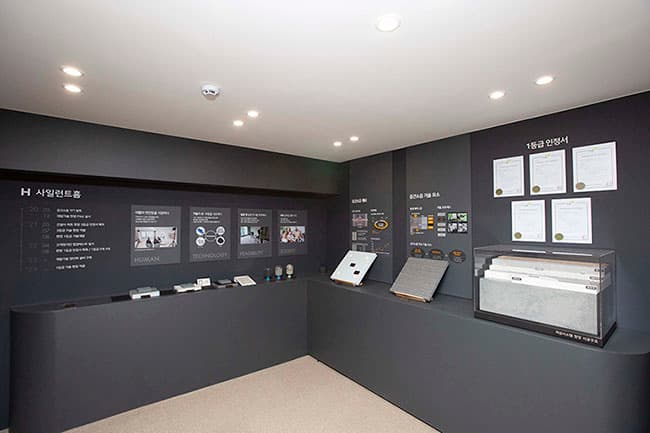
Hyundai E&C has built the 'H Silent Lab,' a facility capable of comprehensive research on inter-floor noise reduction technology spanning from development to demonstration, and is accelerating the development of standard products to commercialize Korea's first officially certified Grade-1 technology.
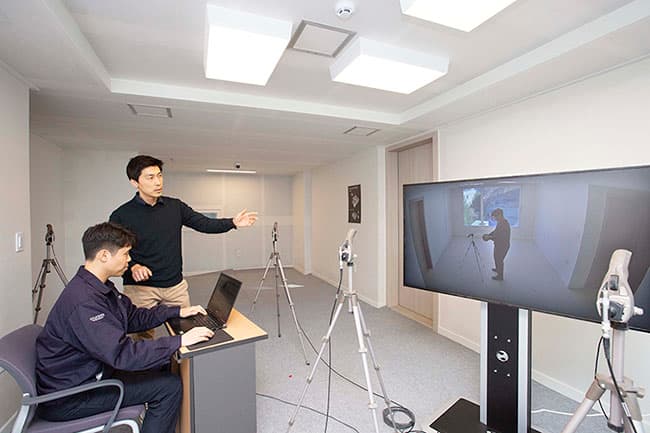
On March 2, Hyundai E&C completed a dedicated inter-floor noise research facility at the Mabuk Technology Research Complex in Giheung-gu, Yongin-si, Gyeonggi-do, equipping it with advanced instruments and specialized personnel for verifying the relevant technologies, and began full-scale operation.
In August of last year, Hyundai E&C laid the foundation for commercializing the technology by becoming the first Korean construction company to obtain Grade-1 certificates for both lightweight and heavyweight impact noise in the floor impact noise performance grade evaluation conducted by an accreditation body of the Ministry of Land, Infrastructure and Transport. The 'H Silent Lab' serves as the forward base for commercializing Hyundai E&C's Grade-1 floor system, conducting research aimed at securing long-term quality, including real-time monitoring of changes in the internal environment (temperature and humidity) and durability assessment through repeated load testing.
Through the operation of its existing inter-floor noise research facilities together with the 'H Silent Lab,' Hyundai E&C has established a comprehensive inter-floor noise research system capable of handling everything in one stop — from basic inter-floor noise research to technology development, demonstration, and real-world application — and is stepping up its efforts to commercialize the technology.
To identify the frequency bands of vibration and the precise locations of noise generation, which vary according to an apartment's structure, unit size, and floor thickness, the 'H Silent Lab' installs multiple sensors on the ceiling and walls of the living room on the floor below and comprehensively analyzes the causes and characteristics of inter-floor noise. The goal is to build a database of vibration and noise measurements taken under various conditions within a unit — such as floor and ceiling finishing materials — thereby improving prediction accuracy to advance the Grade-1 technology and apply it to construction sites at an early stage.
Standing four stories above ground with a total of seven units, the 'H Silent Lab' can verify not only inter-floor noise performance according to floor structure (combinations of slab, ondol layer, and buffer material systems) but also the sound insulation performance of lightweight walls. In addition to the 'wall-slab structure' applied in most Korean apartments, it is also configured with a 'PC Rahmen structure'* that allows easy changes to unit size, enabling research on how noise propagates according to wall conditions while carrying out technology development in parallel. In the wall-slab structure demonstration units, technology development and demonstration are conducted under various conditions — for example, by subdividing the floor system composition requirements for each floor and applying different slab thicknesses to evaluate noise-blocking performance according to project type, such as new construction or remodeling.
Because a Rahmen structure has no partition walls dividing spaces and is instead composed of exterior columns and beams, it offers the advantage of a free floor plan and high space utilization. Hyundai E&C is proactively applying the Rahmen structure — expected to enhance residential marketability by reflecting diverse customer demands going forward — and is simultaneously conducting research on inter-floor noise through floor-plan changes as well as on the sound insulation performance of lightweight walls. In particular, the Rahmen structure installed in the H Silent Lab is distinguished by its application of the PC (Precast Concrete) method*, in which concrete building materials pre-fabricated in a factory are transported to the construction site to be assembled and installed. This reflects Hyundai E&C's commitment to development — leading change in the construction industry through the OSC (Off-Site Construction)* approach and enhancing quality and safety to realize the highest residential value.
For in-depth performance evaluation of inter-floor noise reduction technology, Hyundai E&C is actively utilizing its acoustic laboratory — the largest operated by any domestic construction company — and the Mabuk Technology Research Center's Green Smart Innovation Center (GSIC)*, while also expanding the scope of its research by employing computer simulation technology that adopts analysis techniques used in fields such as automotive and aerospace.
An official from Hyundai E&C stated, "Building on inter-floor noise reduction technology centered on materials and construction methods, we will expand to technology development that also considers floor plans and structures, realizing inter-floor noise-reduced housing that satisfies customers through differentiated residential technology and quality achieved via broad-based technology development," adding, "In step with the government's strengthened inter-floor noise verification system policy, we will also work closely with public institutions to reinforce future residential competitiveness and take the lead in solving social problems."
Meanwhile, Hyundai E&C has demonstrated top-tier performance by becoming the first in Korea to obtain a Grade-1 certificate issued by a national accreditation body. Hyundai E&C is the first company to secure Grade-1 certificates — the highest grade ever — across the board in the floor impact noise performance grade evaluation. In particular, it was the first to be recognized for Grade-1 performance not only with the conventional testing equipment, the bang machine (an inter-floor noise measurement device fitted with a tire), but also with the impact ball method (a volleyball-sized, 2.5 kg rubber ball), which is the government's strengthened measurement standard. While Grade-1 is generally pursued by increasing floor thickness through the concrete slab or ondol layer, Hyundai E&C's Grade-1 floor structure includes a system that secures Grade-1 performance while maintaining the existing floor thickness, proving the unrivaled capabilities of a technology-leading company.
* PC Rahmen structure: A structure in which columns and beams support the slab, with each member fabricated in a factory and assembled directly on site.
* PC method: A method that industrializes the factory production of concrete building materials. Whereas concrete is normally poured after building temporary molds (formwork) at the construction site, in the PC method the concrete is poured into molds at the factory and then assembled on site, offering the advantages of uniform quality and a shortened construction period.
* OSC (Off-Site Construction): A factory-production, on-site-assembly method in which major construction members are produced at a factory and then transported to the site for assembly. It offers the advantages of improving production efficiency and shortening the construction period by standardizing building structural members and turning them into components.
* Green Smart Innovation Center (GSIC): A demonstration center established to verify Hyundai E&C's core green-smart technologies and development. Located within the Mabuk Technology Research Center, its main facilities include a smart office, a multi-test cell, and energy-reduction multi-unit housing facilities.