
Euromonitor's key themes: inflation, sustainability and healthspan
Korean consumers shift from the disappearance of the average to planned spending
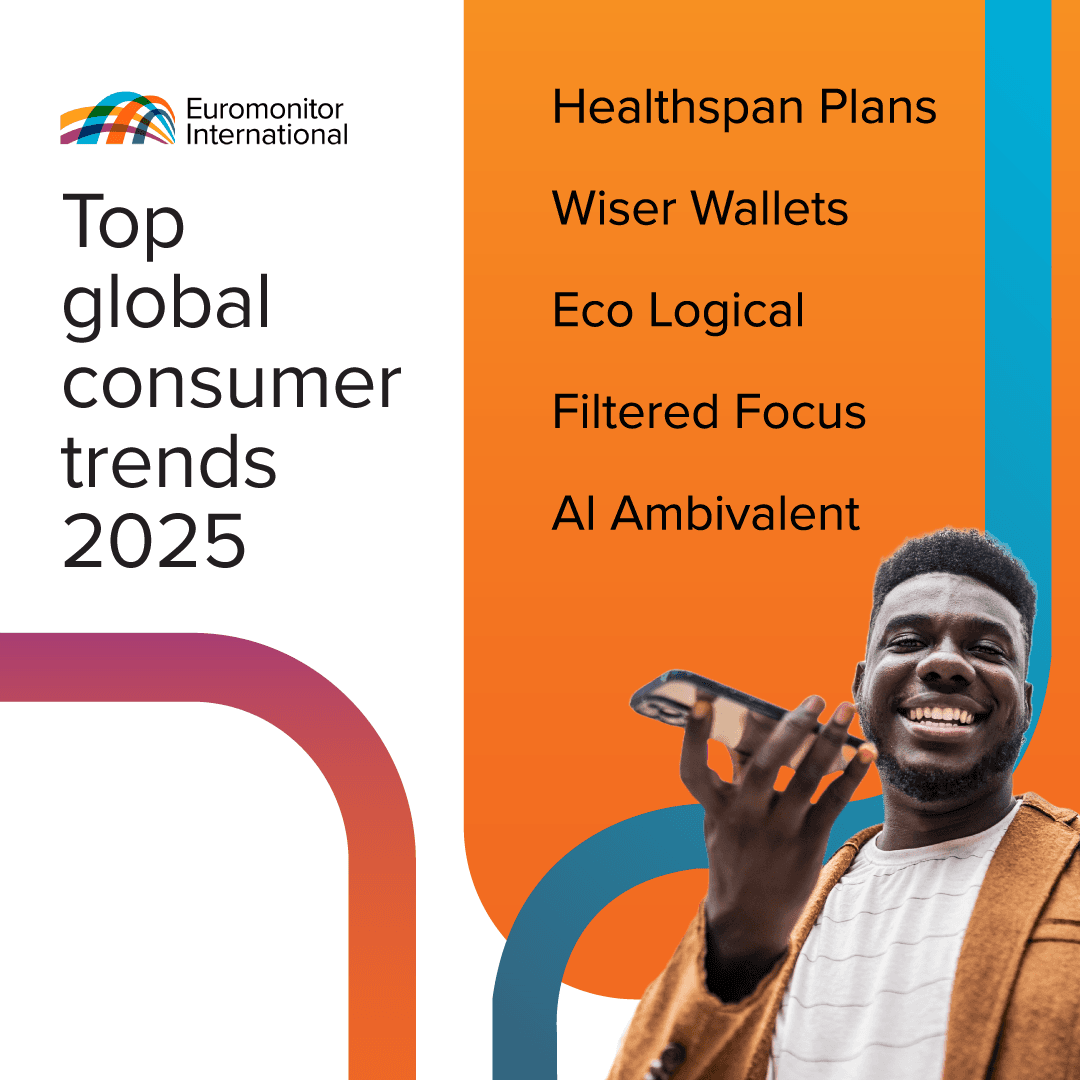
Global data analytics firm Euromonitor International (Korea country manager Choi Seung-yong) announced its five key global consumer trends for 2025 on the 14th (local time).
Euromonitor's 'Top Global Consumer Trends 2025' report analyzes the differing consumption habits across generations and their business impact, offering insights into how companies can leverage these to create new opportunities. Euromonitor stated that three themes — inflation, sustainability and healthspan — are the key keywords for understanding global consumer trends in 2025.
In Korea, 'Wiser Wallets' — a high-inflation-related consumer trend in line with 2023's 'thrifty-tech consumers' and 2024's 'premium thrifty-tech' — is picked as a major trend for 2025. Previously, so-called 'disappearance of the average' spending dominated, centered on Generation Z, in which extreme frugality coexisted with spending money and time for present-moment satisfaction. In 2025, however, as the economic downturn drags on indefinitely, strategic spending that weighs priorities and future value is expected to become the norm. Impulse purchases for stress relief and personal gratification are set to decline, while more consumers will spend deliberately across every dimension — cost, the consumption experience and a product's long-term value.
The 2025 global consumer trends selected by Euromonitor are as follows. ▲Healthspan Plans: Rather than simply living longer, consumers are more interested than ever in extending their healthspan — living long while staying healthy in body and mind. Consumer perceptions of aging naturally, or 'well-aging,' are gradually changing, and the pursuit of — and spending on — a lifestyle that lives every stage of life naturally and healthily is drawing attention. ▲Wiser Wallets: Thrifty-tech continues to evolve. Frugality-oriented spending, which once seemed temporary, has now become fully rooted in consumer behavior. Impulse purchases, typified by 'retail therapy,' are declining, while planned spending that considers every dimension — cost, the consumption experience and a product's long-term value — is on the rise. Companies and brands must offer consumers composite value — the consumption experience, cost, the product and future value — rather than price alone. ▲Eco Logical: Consumer trust in sustainable products is now deeply established, and more consumers are seeking out sustainable products in their everyday use of fast-moving consumer goods (FMCG). Still, high prices remain a burden in consumers' purchasing decisions. ▲Filtered Focus: Consumers, weary of endless alerts and choices, now want to spend as little time as possible making selections. Live commerce, which introduces curated products to consumers in an easy-to-understand way and even facilitates simple payment, is rising in popularity on the back of this trend. ▲AI Ambivalent: AI is rapidly permeating every aspect of consumers' daily lives. While some consumers worry about data leaks and question the results AI produces, they still rank AI as a trustworthy source of information.
Stella Vatcheva, Senior Head of Innovation Practice at Euromonitor, advised: "As more consumers grow cautious about consumption itself, they now seek products and services that are rational, tailored precisely to them and deliver value over the long term," adding, "To stay ahead amid shifting consumer trends and drive growth, companies must now place consumer loyalty alongside product innovation at the top of their business priorities."
Moon Kyung-sun, Head of Research at Euromonitor Korea, diagnosed that "2025 will see consumption take a step back from showing off," analyzing that as the shift into a low-birth, super-aged society becomes tangible to consumers, an attitude of preparing for the future will be detectable in consumption in the coming year of 2025. She continued: "As demanding consumption — staying faithful to the basics while drawing on technologies such as AI to become more personalized — takes root in daily life, a consumption journey that diligently looks after both physical and mental health while finding fulfillment in spending will draw attention not only from the MZ generation but also from the middle-aged and older, and I expect 'smart consumption' to be newly recalibrated."